Want to discover the difference when it comes to Shopify vs Etsy? Discover everything such as how much it costs, how simple it is to set them up, and— most importantly— which one is the best fit for your small business.
Key takeaways
- Choose Shopify for full store customization and branding control; choose Etsy for instant access to millions of active shoppers.
- Shopify plans range from $29 to $299 per month (billed annually), while Etsy charges per listing and per sale, which can suit sellers starting out with low volume.
- Shopify offers superior customer support and thousands of integrations, while Etsy limits customization and third-party connections.
If you’ve just entered the ecommerce world, you’ve probably heard some of the big names. That’s where the debate between Shopify vs Etsy comes in.
It’s become evident that to remain competitive, entrepreneurs need to go for platforms with the latest technology to create their online storefronts. So, we’ve compared Shopify and Etsy, two of the top ecommerce platforms.
In this article we've gone over everything such as how much it costs, how simple it is to set them up, and— most importantly— which one is the best fit for your small business. Let’s get started with what these can do for you.
Shopify vs Etsy at a glance: What should you know?

Etsy serves as a platform for independent sellers to sell almost anything on their online marketplace (as long as it meets the creativity standards), whereas Shopify is an ecommerce platform that allows businesses to design and run their online stores.
Setting up a Shopify store takes a little more time upfront, but in return you can design every aspect of your online store, such as your brand’s online presence, your storefront look, and how you advertise and sell your products.
On Etsy, you’ll find the target customers you’re looking for — but there’s also an influx of competitors. All you have to do is put up your products on the website and market them to sell them.
What is Shopify?
Founded in 2006, Shopify is an ecommerce platform that enables retailers to launch their websites. According to BuiltWith, there are now nearly 7 million live Shopify stores worldwide.
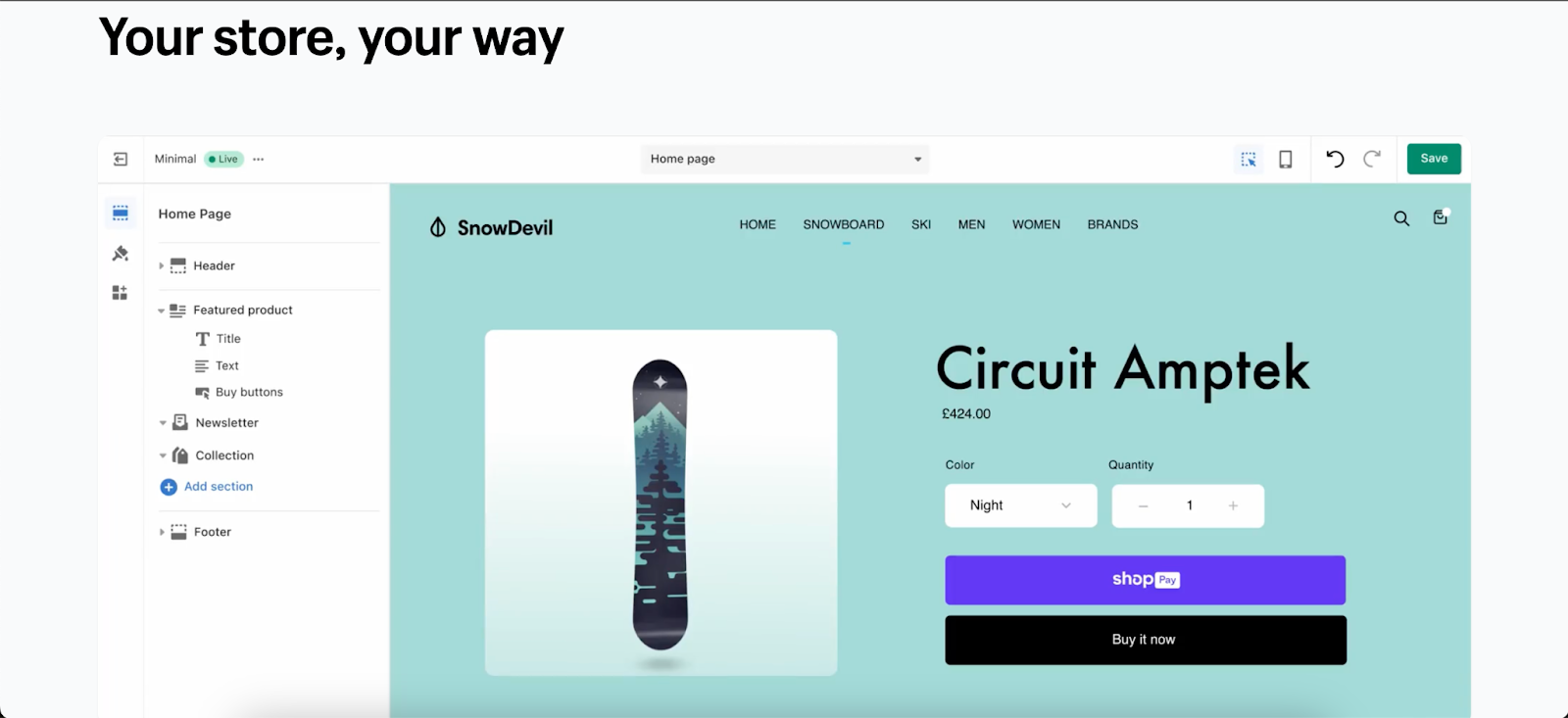
To run a custom storefront on Shopify, you choose a subscription plan, billed monthly or annually. With an ecommerce website of your own, you can upload products, take payments from customers, and monitor order delivery.
You’ll find that many tasks have been automated, simplifying marketing and store upkeep for those who haven’t had that experience. Shopify also offers thousands of apps and integrations, so you can add third-party tools to extend your store’s functionality.
What is Etsy?
With 5.6 million active sellers at the end of 2025, Etsy is a well-known online marketplace that provides your store with a sizeable customer base to draw from, eliminating the need for you to worry about drawing attention to your products through marketing campaigns.
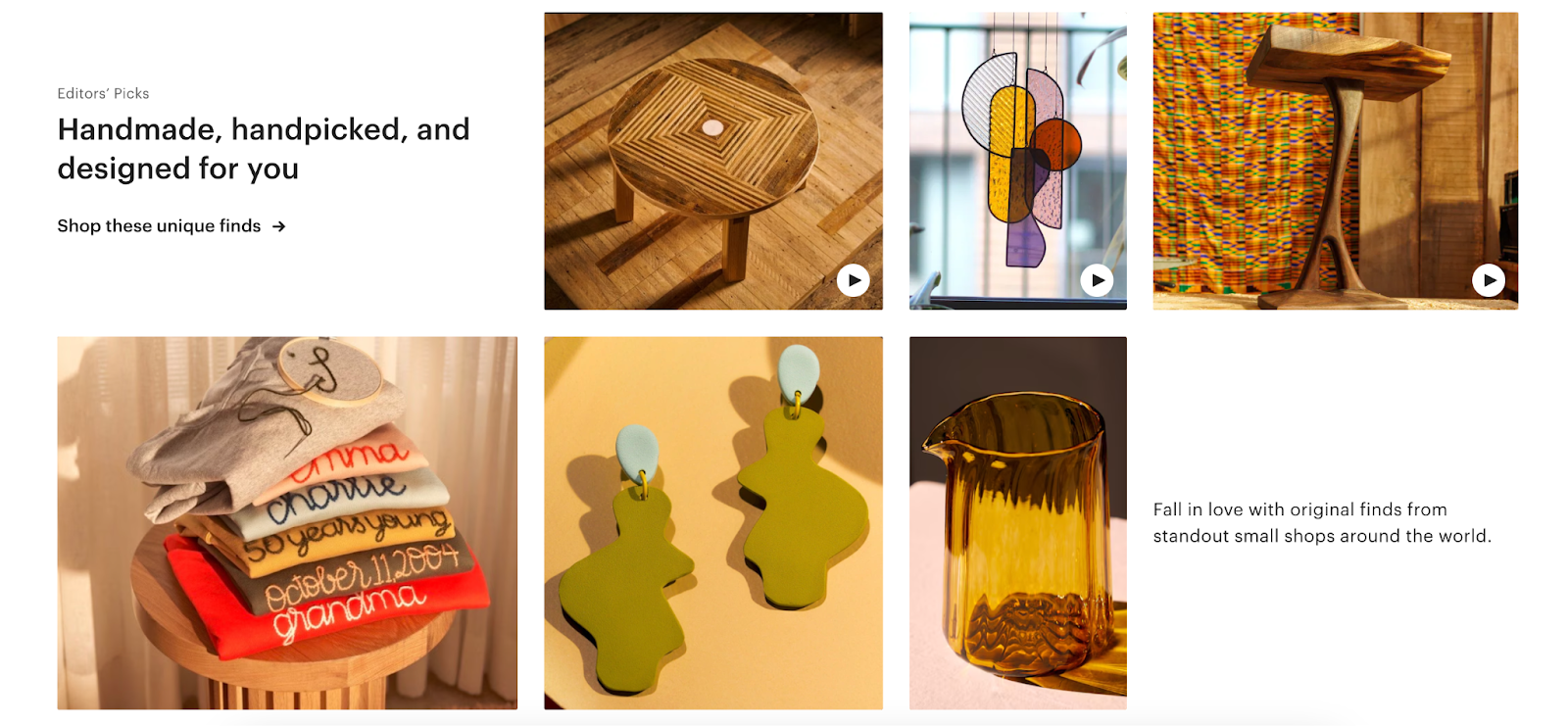
The website started in 2005 with a focus on three product categories: handmade, vintage, or craft goods. Now, it has expanded to other areas as well (like digital products) but these types of products are most commonly found on the site.
Moreover, it has a big and active customer community, which is focused on handcrafted goods. In fact, Etsy had 86.5 million active buyers at the end of 2025.
How do the platforms compare: Shopify vs Etsy
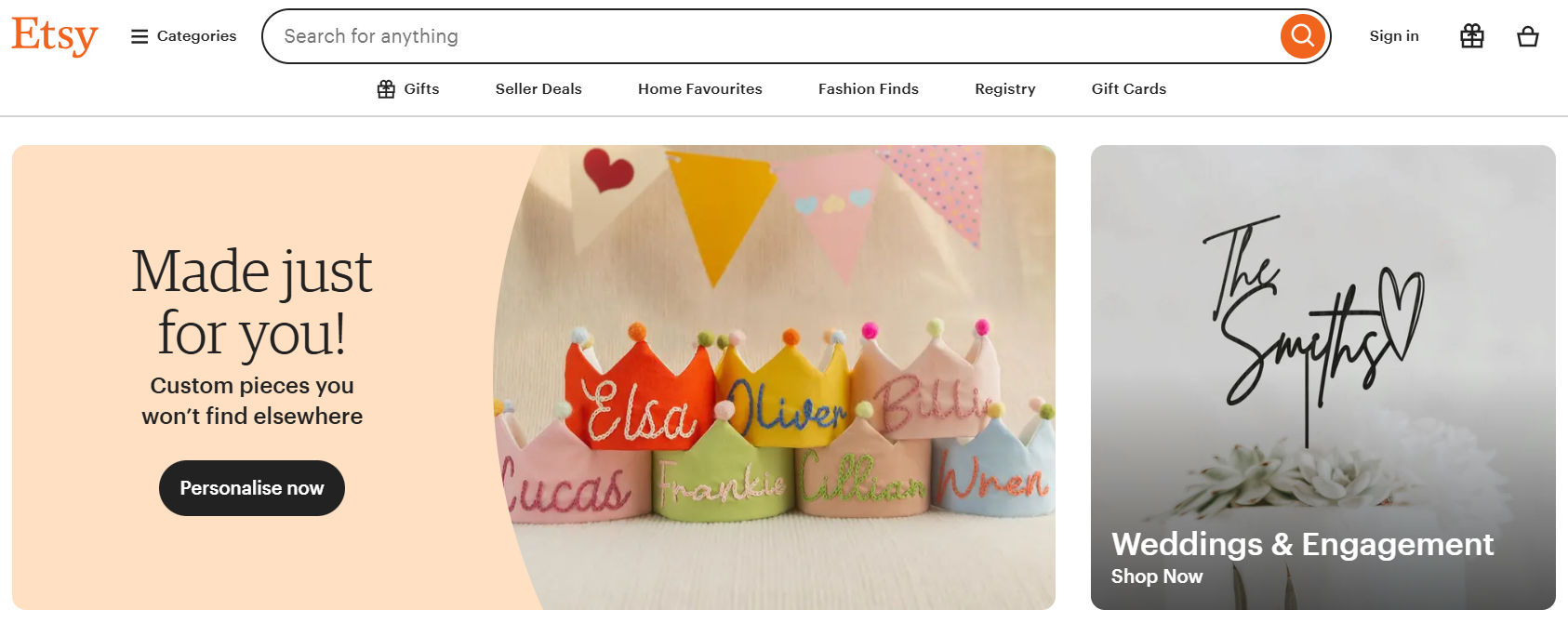
Now that you understand what these platforms are and have an idea about their functionality, let’s put Shopify and Etsy head-to-head to understand which is better for you.
Ease of use
You don’t need to spend a lot of time learning how to use or configure Shopify because you have a wide range of no-code themes and layouts to choose from. Plus, if you’re thinking about customizing your store, you have that option as well.
Starting a Shopify account merely requires a few quick questions to learn about you and provide services that meet business needs. You can easily launch your store, add product photos and descriptions, configure shipping and payment methods, and more. Plus, you can navigate the dashboard easily as the majority of pages can be accessed from there.
For those who might require assistance using the platform, Shopify provides excellent customer support in the form of lessons and guides too.
What about setting up the Etsy store?
You can quickly learn how Etsy operates even if you have no prior experience starting or running an online store.
Whether you're selling handcrafted goods, vintage goods, or supplies for arts and crafts, you have to make a new listing for every product you sell on the marketplace.
As soon as you sign up, your new Etsy shop opens for business and you'll be able to begin selling goods. You still need to upload your products, write descriptions for them, take photos of them, and all that. They make the setup process simple with their tutorials and forums, but some of the videos are outdated.
Store customization
With hundreds of free and premium themes to choose from, Shopify lets you tailor your home page content once you’ve picked a theme.
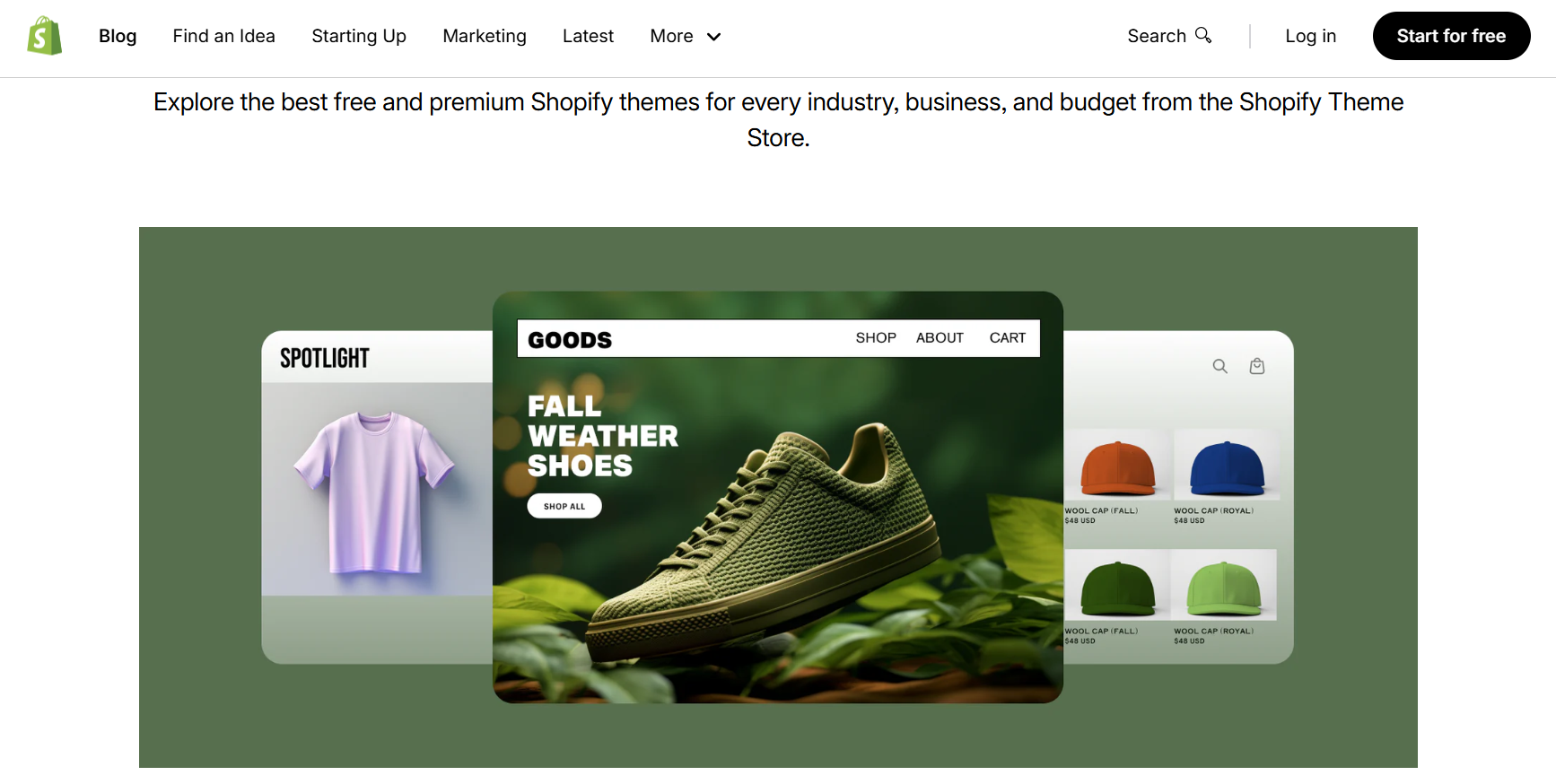
To further enhance user experience, all Shopify themes are optimized for search engines and are responsive to mobile devices. You can switch between themes whenever you’d like, with a few tweaks to your content and layout where needed. You even have the option to work with Shopify Experts to develop Shopify themes or to build them yourself.
Comparatively, you’ll find that Etsy's store designs are generic, which makes it hard to stand out from the competition. It’s also difficult to modify your store because they all use the same template. However, Etsy will always use its best efforts to maintain a neat, responsive, and appealing store, so you can be sure of that.
Etsy also offers a website builder named Pattern with a higher monthly fee. By using that, you can use custom domains to build and personalize stand-alone ecommerce websites.
Customer support
Shopify offers 24/7 assistance and support to its customers. In addition to its extensive Shopify Help Center, you can reach the support team via live chat around the clock.
If you’re having any issues with your Etsy store, you can visit their Help Center. They also offer you support over newsletters and forums, and they even have an Etsy Seller Handbook. Unfortunately, you'll have to submit a help request instead of trying to reach someone as they don’t have any direct contact channels. Even with email, it can take you two to five working days for a response.
But these aren’t the only factors you should consider when choosing Etsy vs Shopify.
Shopify vs Etsy fees
One of the most important things you should consider while setting up your online store is how much will it cost.
So, let’s compare Shopify vs Etsy fees:
Shopify offers a 3-day free trial with no credit card required. After that, most plans cost just $1 per month for your first three months.
- Basic: $29 per month (paid annually) or $39 per month (paid monthly). Includes an online store for listing and selling products, and round-the-clock customer support.
- Grow: $79 per month (paid annually) or $105 per month (paid monthly). Includes five staff accounts, reporting capabilities, lower credit card rates, and point-of-sale benefits.
- Advanced: $299 per month (paid annually) or $399 per month (paid monthly). Includes even lower credit card rates, 15 staff accounts, and other operational benefits.
If you’re looking to sell wholesale, you can choose the Plus plan, which starts at $2,300 per month on a three-year term. Added bonus: you’ll also get priority customer support.
Shopify accepts major credit cards such as Amex, Visa, and Mastercard, with card rates that vary by plan. If you use a third-party payment gateway, you’ll pay an additional transaction fee based on your plan: 2% for Basic, 1% for Grow, and 0.6% for Advanced.
If you use Shopify Payments, Shopify’s built-in payment solution, you won’t pay these additional fees.
Etsy doesn't charge a monthly fee; instead, you will be charged extra for each transaction. For every item you put for sale on Etsy.com or its mobile apps, you will be assessed a listing fee of $0.20. You’ll also have a transaction fee of 6.5% of the price you list for each item plus the cost of shipping and gift wrapping will be deducted from your earnings.
For US-based vendors, payment processing fees are 3% + 25 cents for each transaction. If Etsy must exchange foreign currencies for US dollars, currency costs will be charged.
Etsy does have a Plus plan at $10 per month, which can be useful for those looking to expand their shop. Their benefits include credit allocation for listings and Etsy ads per month, discounts on a personalized website, and savings on packaging and marketing supplies.
If you’re planning to use Etsy Pattern, you’ll have to pay $15 monthly to set up your website with a unique domain name while still listing products on Etsy. So, while there is no monthly payment, there are many different fees that can quickly stack up.
The biggest differences between Shopify and Etsy
While going through the sections above, you’ve probably already found some differences between Shopify and Etsy. Let’s go over the table below for a better overview:
| Shopify | Etsy | |
|---|---|---|
| Pricing & fees | Shopify starts with a 3-day free trial, then $1 a month for your first three months on most plans. Standard plans range from $29 to $299 per month (billed annually). | Etsy's standard plan is free to use, and you can use most of the features available with that. However, it does have a significantly higher transaction fee. |
| Store design | You can customize your store even further with the platform's templates and layouts. It's possible to modify the main typefaces, colors, and pictures on the website as well. In fact, you even have the option to make your own custom theme. | You can design your Etsy storefront with a simple layout but it can't be customized like Shopify. However, you have the option to use Pattern but it costs $15/month. |
| Help & support | On Shopify, you can find many channels to communicate with their support team. Plus, they have an abundance of resources that can cover any problem you may have. | Etsy does have a detailed help center and guides as well. However, you'll also have to wait to get a hold of them as they don't have any direct lines. |
| Integrations | Shopify is known to have thousands of integrations with multi-selling platforms, customer support websites, payment channels, and more. It also has its own point-of-sale system, Shopify POS, and its own built-in payment solution, Shopify Payments. | Comparatively, Etsy is more limited in its integrations and it doesn't allow for a native POS so you'll have to use a third-party app. |
So you might be wondering which should you choose Shopify or Etsy?
Shopify or Etsy: Which is Best for You?
You already know that both Etsy and Shopify give sellers a way to get their products into their buyer’s hands.
If you’re a small business with growing inventory, Shopify lets you scale and manage your store using its many integrations. It also offers marketing tools that you can use to expand your online presence. With customizable templates, you have more creative control over the layout of your website as well.
In terms of fees, Shopify charges a monthly plan fee plus card rates per transaction, with plans that scale as your business grows.
Meanwhile, Etsy only charges a fee for each sale and item listing, but there isn't a monthly cost for its basic service. If you sell handcrafted goods or artisan services and you don't currently have a list of customers, Etsy can help you build a more loyal consumer base. Plus, you don’t even have to think about investing more time in marketing as it offers some capabilities.
After considering all this, it is clear that Shopify does have some benefits over Etsy due to its unmatched technology and capabilities compared to other players in the market. In case you can't choose between the two, you can actually integrate Etsy with your Shopify store.
And if you want to build and run your whole business in one place, Whop is the end-to-end platform built for exactly that.
Whop: the end-to-end platform for building your business
Whop is the end-to-end platform for building and running a business. You can set up your store, accept payments, and manage payouts, all from one place.
Not sure where to start? Use a Whop Blueprint to copy an existing business built on Whop, then make it your own.
Once you’re up and running, accept payments through subscriptions or one-time purchases, and get paid out with flexible payout options.
Prefer to work agentically? Use the Whop CLI to run your whole business from the terminal.
It’s free to get started. Start building with Whop today.
FAQs
Is Etsy better than Shopify?
While Shopify can be used by owners who want to create a stand-alone ecommerce website, Etsy offers a platform for small business owners to sell their goods. Additionally, Etsy provides a variety of marketing resources for sellers to use. However, Shopify has the upper hand in terms of customization, flexibility, and access to more payment, selling, and other channels.
Should I sell on both Shopify and Etsy?
There’s a sweet spot between selling through both Etsy and Shopify as it is quite useful. While Shopify can help create your brand and own your audience, Etsy's built-in audience offers an opportunity to be easily discovered by your target audience. This increases your overall sales while maintaining a presence across all channels. However, some customers might also like making purchases through one platform over another, providing greater freedom and personalization for the buyer. In that case, you can integrate your Shopify store with an Etsy channel.
What is the best platform to sell online for beginners?
The best platform depends on what you’re selling and how you want to grow. Etsy suits sellers of handmade or vintage goods who want access to an existing marketplace audience, while Shopify suits sellers who want a fully branded store they can scale.
Whop is the end-to-end platform for building and running a business. You can accept payments, manage payouts, and get started quickly with a Blueprint based on an existing business built on Whop. It’s free to sign up, and you can set up your store within minutes.