Want to offer instant payouts? Here’s what building them yourself takes, from licensing and rails to risk controls, plus the faster provider route.
Key takeaways
- Sellers now expect instant payouts, and slow or broken payouts quickly erode their trust and drive churn.
- Instant payouts can fund themselves by keeping standard payouts free and charging a small fee for instant access.
- Building instant payouts yourself requires licensing, rail partners, funding, risk controls and a ledger, so many platforms use licensed providers instead.
Instant payouts send a recipient’s earnings to their bank account or debit card in near real time, usually within 30 minutes, 24 hours a day, 7 days a week. Building them yourself means taking on licensing, payment rails, funding, risk controls, and a ledger. Yet today, most platform users expect instant payouts.
It wasn’t always this way. Lyft launched one of the first big instant payout features, Express Pay, in late 2015, and Uber followed months later with Instant Pay, which the press reported as a direct response. What started as a perk a decade ago is now expected well beyond ridesharing.
Here's what it takes to build instant payouts into your platform, and how a payments provider can handle most of the heavy lifting.
How instant payouts differ from standard payouts
Most platforms bundle standard payouts into batches and send them over ACH on a set schedule. Even after the batch goes out, it can typically take one to three business days for the money to reach the recipient's account.
Instant payouts skip the batch and travel on real-time rails like RTP and FedNow, or on card networks through push-to-card.
Instant payout does not mean instant settlement
This is one distinction that trips platforms up: an instant payout is not the same as instant settlement.
When a buyer pays by card, the money can take days to reach your platform. So to pay a seller instantly, you either wait until the buyer’s money arrives or pay the seller from your own funds in the meantime.
More on that in Step 3.
Why your platform should offer instant payouts
Instant payouts help you win sellers, keep their trust, and can even pay for themselves. Here’s how, and why.
Payout speed is a platform differentiator
Given the choice between a platform that offers instant payouts and one that doesn't, people will pick the platform that pays them faster. The stats back this up: in a 2025 Worldpay "Holiday Hustle" survey, 81% of gig workers said they would prioritize a platform that offers instant payments over one that doesn't.
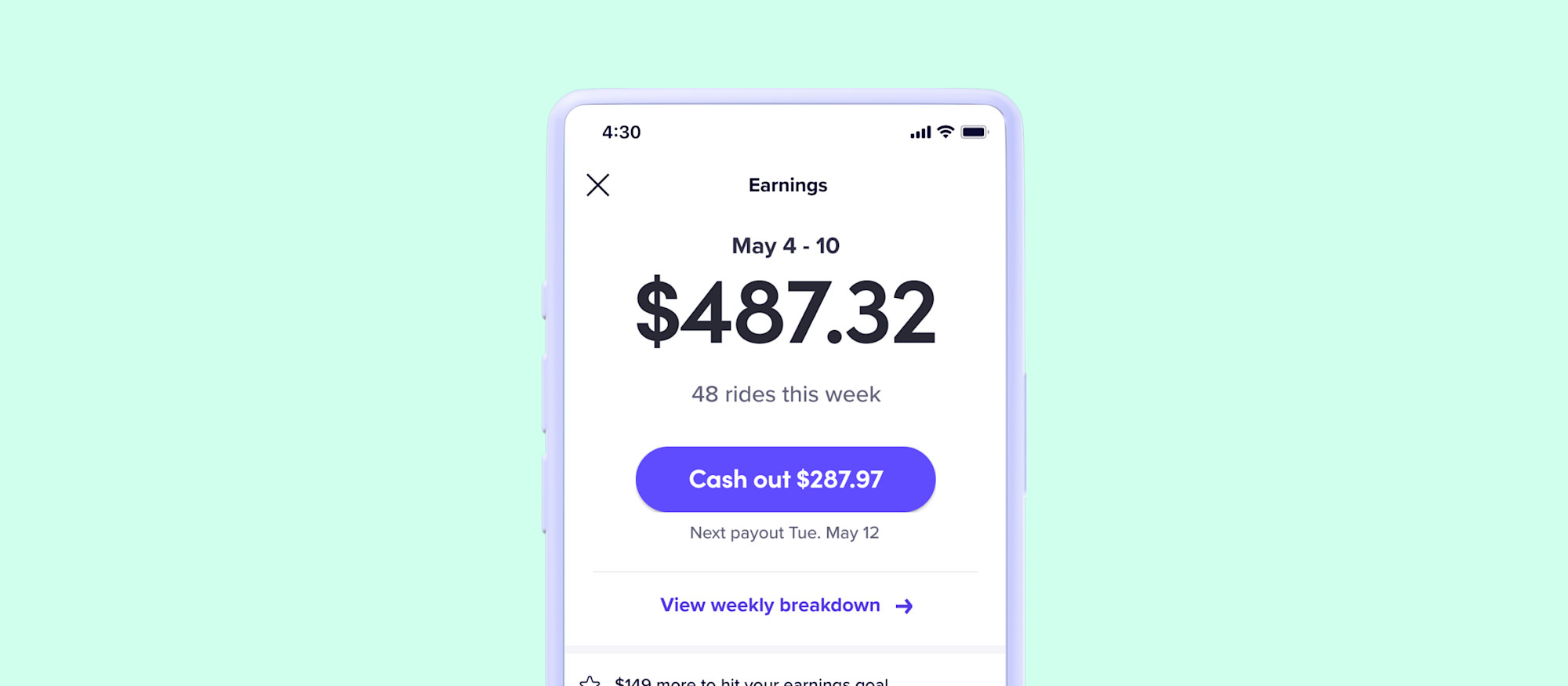
Instant access to earnings makes sense when you consider how creators, sellers, and gig workers get paid. They earn per sale or per job, often in small amounts, with no regular paycheck. So when an unexpected bill pops up, they need their earnings now, not next week.
Slow or broken payouts cost you trust (and sellers)
When payouts go wrong, the internet gets loud.
In October 2026, a processing problem with Poshmark's banking partner left sellers waiting weeks for their money. One seller requested a $1,960 deposit on September 27. By October 2 it still had not arrived, so they opened a support ticket. A week later, on October 9, the payout showed as "complete" in the app, but the money was still missing – so they opened a complaint with the Better Business Bureau. The issue was finally resolved on October 10.
This was one of seven Poshmark payout-related complaints through the Better Business Bureau during October 1 to 10.
Amazon sellers also felt the effects of slow payouts earlier in the year. In mid-March 2026, Amazon introduced a new policy requiring some US sellers to wait until seven days after products are delivered to get paid.
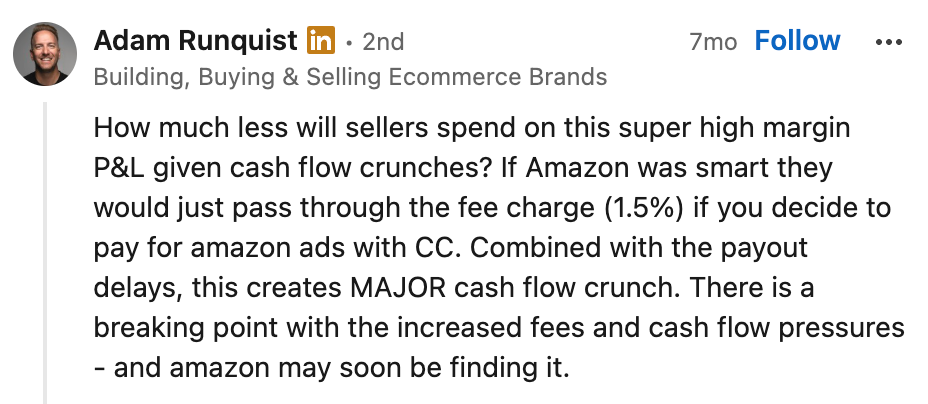
A month later, hundreds of large sellers boycotted Amazon’s ad platform. The boycott was about ad policy changes, but for some sellers, it came on top of frustration with the new payout delays. One founder said the two together created a "MAJOR cash flow crunch."
If you're running a platform, the lesson is clear: when payouts go wrong, sellers stop trusting you. The first payout is especially important, because it’s the first time a seller sees your platform actually pay them. If that payout is late, they're far more likely to churn.
Instant payouts can pay for themselves
Instant payouts can cover their own costs, because most people are happy to pay for early access to their cash. In the same Worldpay survey, 67% of gig workers said they'd pay a small fee for immediate access to their earnings.
That's why most big platforms use the same model: free standard payouts, paid instant payouts. Sellers who can wait a few days pay nothing extra, and those who want their money now pay a small fee. Here's how that looks across some of the biggest platforms on a $50 payout.
| Platform | Instant fee | Minimum to cash out | Paid to | Fee as a share of a $50 payout |
|---|---|---|---|---|
| Uber Instant Pay | $1.75* | $1 | Debit card or bank account | 3.5% |
| Lyft Express Pay | $1.75** | $6.75*** | Debit card | 3.5% |
| DoorDash Fast Pay | $1.99 | $1.99 | Debit card | 4% |
| Upwork Instant Pay | $2 | None listed | Debit card | 4% |
| Etsy instant transfer | 1% (min $0.25, max $1) | $25 | Bank account | 1% |
| Stripe Instant Payouts | 1.5% (min $0.50) | None listed | Debit card or bank account | 1.5% |
Fees as of October 2026, US only.
*Free in NYC
**Free in New York State
***$6.75 after Lyft's fees
The last column is what you want to pay attention to. If your sellers make small sales, a flat fee that barely registers on a $500 payout can be an unreasonable fee on a $5 payout. Which brings us to:
When instant payouts are the wrong call
If your sellers' payouts are very small, your orders have long refund windows, or the people you pay don't need their money fast, instant payouts probably aren't worth it for your platform. In those cases, faster bank transfers, in-platform spending, or minimum withdrawal amounts usually work better. Here's why:
- Very small payouts: a flat instant fee takes a big chunk out of a small payout – a $1.75 fee is 3.5% of a $50 payout but 17.5% of a $10 one.
- Long dispute or delivery windows: selling physical goods or services that haven't been delivered yet? Paying sellers instantly means paying them before you know the buyer is happy with their purchase. If they're not and ask for a refund, you may have to chase the seller for that money back.
- People who don't need speed: authors collecting quarterly royalties or businesses paying B2B invoices are used to waiting, and most won't pay to access their money sooner.
Most platforms in these categories offer 'faster' payouts rather than instant ones, such as same-day or next-day bank transfers.
How to build instant payouts into your platform
If instant payouts are the right move for your platform, here's what it takes to build them yourself. There are nine steps, roughly in the order that you'd tackle them – the first three are the decisions you need to make before doing anything else.
Two things to know before you start – first, these steps assume that you're already splitting each payment between your platform and your sellers at checkout. If you're not, start with the guide to marketplace payment platforms.
Second, this guide is written for US platforms paying US recipients. Paying people in other countries adds local payment networks, licensing, and currency conversion in every market. If that's you, see this guide to global payout platforms.
Here’s an overview of the nine steps:
| 1. Choose your regulatory route | Handle it yourself, use a sponsor bank, or build on a licensed provider |
|---|---|
| 2. Pick your rails and rail partners | Real-time bank transfers, push-to-card, or both |
| 3. Decide how you’ll fund payouts | Who covers payouts before buyer money settles |
| 4. Build a ledger that knows what’s withdrawable | How you track what each seller can withdraw |
| 5. Put risk controls in front of every payout | Who can cash out instantly, and when |
| 6. Set your fees and payout rules | What sellers pay, and any minimum cash-out |
| 7. Integrate your partners’ APIs and build your payout service | How your app connects to your partners and sends payouts |
| 8. Set up reconciliation and 24/7 support | How you catch missing payouts and help sellers around the clock |
| 9. Pilot before you launch | Which sellers get instant payouts first |
1. Choose your regulatory route
Before you build anything, work out whether you're legally allowed to hold and move your sellers' money. In the US, doing so, even for a few minutes, can make your platform a money transmitter. That means registering with FinCEN as a money services business and getting a money transmitter license in most states you operate in.
Licensing state by state is slow and expensive. Compliance firm ComplyOne estimates that a nationwide licensing rollout takes two to four years.
Thankfully, getting licensed isn't your only option. You have three routes:
- Handle it yourself: get licensed in every state you operate in, or qualify for an exemption. Many marketplaces rely on the agent-of-the-payee exemption, which most states now recognize: if your sellers formally appoint you to collect payments for them, a buyer paying you counts as paying the seller, so you’re not transmitting money. It doesn’t apply in every state, and the conditions vary, so you’ll need a lawyer to confirm it covers your model.
- Partner with a sponsor bank: banks are exempt from money transmitter licensing, and if you’re formally appointed as the bank’s agent or service provider, that exemption can extend to you. You build on top of the bank’s infrastructure, but you’ll still need to meet its compliance requirements.
- Build on a licensed provider: a payments provider holds the licenses and moves the money and you integrate with it. This is the fastest route, but also gives you the least control.
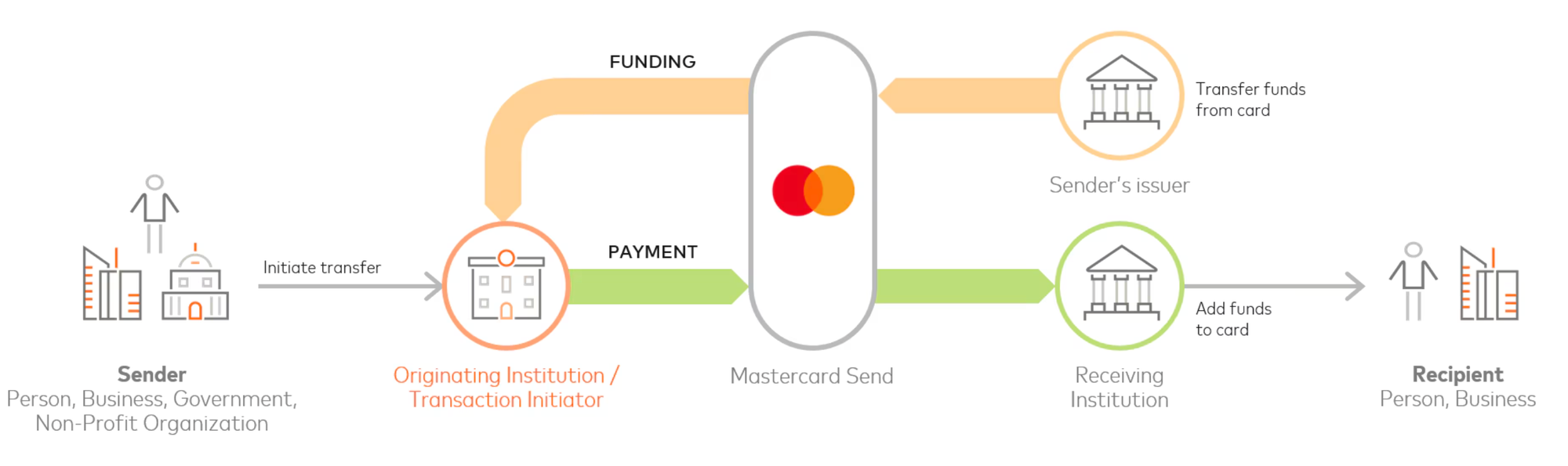
Wondering how much control you really need? Even some of the biggest platforms took the easier routes rather than opting for full control. Lyft built Express Pay with Stripe, and Uber's Instant Pay ran through Green Dot's real-time payment disbursement service and Mastercard Send technology.
Think about tax at this point, too, because it's a compliance decision you need to make upfront. Plan to collect W-9 or W-8 forms from sellers at the onboarding stage, and report their earnings on Form 1099-K once they pass IRS thresholds.
Money transmission rules vary by state and depend on exactly how your platform handles funds, so talk to a payments lawyer before you choose a route.
2. Pick your rails and rail partners
Once you've picked your route, you need a way to move the money. In the US, instant payouts run on two kinds of rails: real-time bank transfers and push-to-card. Most platforms offer both, so sellers can choose where their money ends up.
Real-time bank transfers happen through RTP and FedNow, which send money straight to a seller's bank account in seconds, any time of day. Only banks can connect to these networks directly, so you'll reach them through a participating bank.

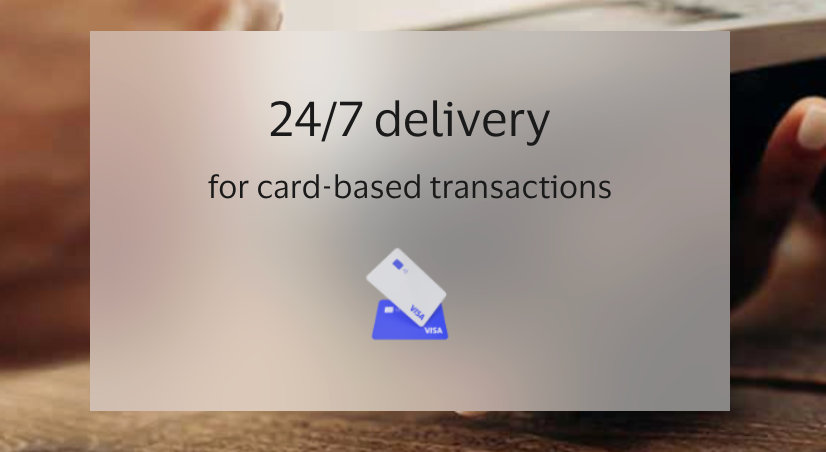
Push-to-card happens with Visa Direct and Mastercard Send, which push money to a seller's debit card, usually within minutes. You'll connect through an acquiring bank or processor.
How you connect to these rails depends on the route you chose in Step 1. If you’re handling it yourself or using a sponsor bank, you’ll negotiate and integrate each of these connections yourself. With a licensed provider, the rails are already connected, and you integrate one API.
However you connect, each rail caps how much you can send in one payout, which matters if some of your sellers earn large amounts. FedNow's network limit rose from $1 million to $10 million in November 2025, but the default limit is still $100,000, so if a bank never changes its limit, the default applies. Earlier that year, The Clearing House raised RTP's limit from $1 million to $10 million.
Push-to-card limits are much lower, and neither card network publishes a single figure. Mastercard Send sets limits for each platform through the bank that sponsors it. For Visa Direct, partners report a default of $2,500 per payout for US person-to-person transfers, rising to $10,000 for approved programs, with business disbursement programs often allowed more.
Keep in mind: each payout also costs you money, which you can pass on to sellers as an instant payout fee (more on that in Step 6). FedNow costs $0.045 per credit transfer, but the first 2,500 transactions each month are discounted to $0. That's what the Fed charges the bank, but the bank's price to you will be higher after it adds its own markup to the network fee. Push-to-card costs more: industry estimates put the all-in cost at $0.35 to $2.00 per payout, depending on your processor and volume.
Here’s what each rail costs the platform at three payout sizes:
| Payout | RTP (network fee) | FedNow (network fee) | Push-to-card (industry estimate) | Push-to-card (Stripe’s published price) |
|---|---|---|---|---|
| $10 | $0.045 | $0.045 ($0 for the first 2,500 a month) | $0.35–$2.00 | $1.58 |
| $50 | $0.045 | $0.045 ($0 for the first 2,500 a month) | $0.35–$2.00 | $1.88 |
| $500 | $0.045 | $0.045 ($0 for the first 2,500 a month) | $0.35–$2.00 | $5.25 |
RTP and FedNow figures are network fees charged to banks; your bank’s price to you will be higher. Push-to-card estimate from Routable; Stripe figures based on its published $1.50 + 0.75% price for debit card payouts.
The table makes the trade-off clear: bank rails cost almost nothing at the network level, whatever the payout size, while card payouts cost more and, with percentage pricing, get pricier as payouts grow.
You'll also need to consider coverage, because not every bank or debit card can receive instant payments. When Lyft launched Express Pay, some banks didn't show the funds until the next day, and Uber’s Instant Pay first paid out only to a GoBank account, expanding to most US debit cards five months later.
For small consumer payouts, start with push-to-card. It costs more, but it works for almost every seller on day one: Stripe says about 99% of US banks issue compatible debit cards. For business sellers or larger payouts, start with real-time bank transfers, which cost less and have much higher limits. You can add the other rail later.
3. Decide how you’ll fund payouts
Earlier, I mentioned the gap between instant payouts and instant settlement. This step is about deciding how you'll cover that gap.
- The fastest option is to keep enough of your platform's cash in a payout account to cover instant withdrawals until buyer payments settle. Sellers get the fastest experience, but you need working capital that grows with your payout volume, plus extra to cover weekends and holidays. Stripe works this way for its own users: Instant Payouts give them access to their funds right after a successful card charge, but before the money settles.
- The cheaper option is to allow instant payouts only once the buyer's money has arrived. This costs you nothing upfront, but sellers still wait a few days after each sale. Upwork uses this approach, with client payments going through a five-day security period before freelancers can withdraw them.
- And for physical goods and services, you could hold the funds until the order is complete, so you're not paying out on orders that end in a refund. That’s the model Poshmark uses: a seller’s earnings stay pending until the buyer accepts the item, or three days after delivery.
Who covers that cash depends on your route. If you’re handling it yourself or working with a sponsor bank, it’s your platform. With a licensed provider, it depends: some let sellers withdraw pending funds and cover the gap for you.
Just starting out? Limit instant payouts to settled funds. It's the simplest option, costs nothing upfront, and you can move to pre-funding once you know how much your sellers withdraw.
4. Build a ledger that knows what’s withdrawable
Every instant payout starts with one question: how much can this seller withdraw right now? Your ledger answers it.
With batched payouts, you have until the next run to catch a discrepancy, but with instant payouts, the withdrawable balance is acted on the moment it changes, so the ledger has to be right in real time. Get it wrong, and you'll pay some sellers twice or pay out money that isn't theirs.
Beyond pending and available balances, your ledger needs to track funds that are held, reserved for a payout in flight, or spent in-platform as store credit, with fees, refunds, and chargebacks posting against the right state. Payout requests need idempotency keys, and balances need to be reserved before a payout is sent, so retries or simultaneous requests can’t pay a seller twice. When a payout fails or is returned, the money needs to go straight back to the seller’s available balance.
If you’re handling it yourself or working with a sponsor bank, the ledger is yours to build and maintain. With a licensed provider, the provider usually maintains it for you. Whop, for example, maintains a separate ledger for every seller account on your platform.
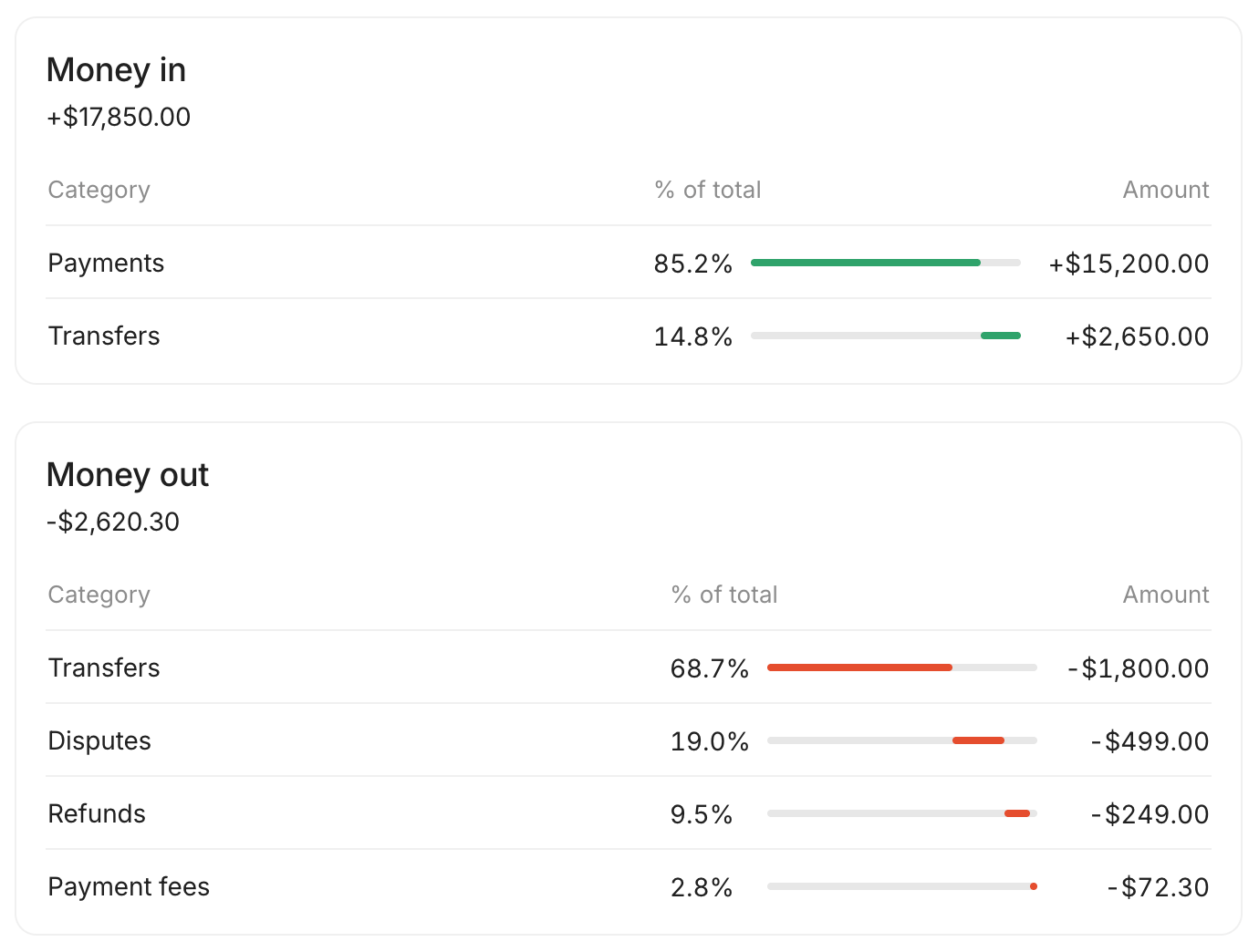
Build the ledger before the payout button. Everything else in this guide depends on it being right.
5. Put risk controls in front of every payout
With standard payouts, there’s time to spot fraud before money leaves your platform. Instant payouts remove that window, so every check has to run before the money moves.
The first checks happen before a seller can withdraw anything at all: KYC for individuals, KYB for businesses, and sanctions screening.
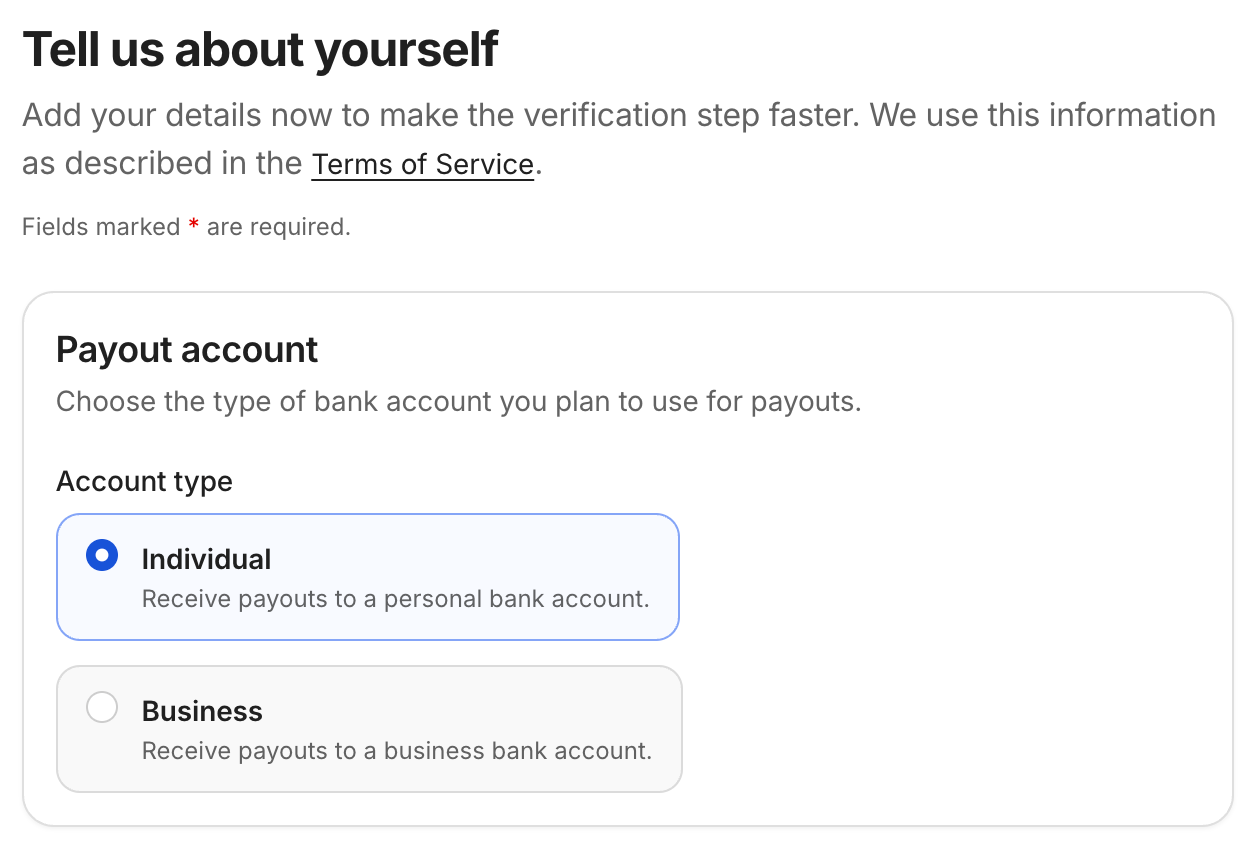
But passing onboarding once doesn't mean that an account stays safe forever, so keep watching for warning signs over time, such as a new payout method added minutes before a large withdrawal, a login from an unfamiliar device, or a change in how often someone cashes out. These are classic signs of account takeover, which is on the rise: in the Federal Reserve’s 2026 Risk Officer Report, 23% of financial institutions said they’d been hit by it, up 7% from the year before. Velocity limits and flags on payout-method changes help catch takeovers before it's too late.
Some risk only shows up after the money has gone, though. A buyer can dispute a card payment weeks after the seller has cashed out, leaving your platform covering the chargeback. To protect yourself, you can limit instant payouts for new sellers, hold back part of the balance on higher-risk accounts, and take any losses out of the seller’s future earnings.
eBay, for example, holds funds for new and infrequent sellers while they build a selling history, typically releasing them within 30 days. It also holds funds when a sale looks unusual, releasing them three days after delivery is confirmed. Whop only enables instant withdrawals for businesses with an established sales history.
If you’re handling it yourself or working with a sponsor bank, the risk program is yours to build, usually on top of a KYC provider and screening tools. Expect it to be audited by state regulators if you’re licensed, or by your bank if you’re working with one. With a licensed provider, verification and screening are handled for you, and your job becomes setting the policies on top – like who qualifies for instant payouts and how big a reserve to hold.
Whichever route you take, start strict and loosen over time. It’s far easier to give trusted sellers faster access than to claw money back from accounts you paid too soon.
6. Set your fees and payout rules
Before you decide what to charge sellers, work out what each instant payout costs you. That's the rail fee from Step 2, plus your bank's or provider's markup. Stripe, for example, charges platforms $1.50 plus 0.75% to send a payout to someone's debit card, while FedNow's network fee is a fraction of a cent before your bank adds its own price.
From there, you have three choices to make. You can absorb the cost as a perk, pass it on to sellers as an instant payout fee, or set a minimum withdrawal so each payout is big enough to justify the cost. Most large platforms charge sellers a flat fee, as the table earlier showed, but flat fees hit small payouts the hardest:
| Payout | Uber’s $1.75 flat fee | Stripe’s 1.5% fee (min $0.50) |
|---|---|---|
| $5 | 35% | 10% |
| $10 | 17.5% | 5% |
| $20 | 8.75% | 2.5% |
You'll also need to decide whether to set a minimum cash-out amount. Etsy, for example, won’t process an instant transfer under $25, which stops its fee from eating into very small payouts.
Whatever you charge, make it clear. Gaming education platform Metafy, which runs its payouts through Whop, lets coaches choose between next-day ACH and instant transfer, with fees shown upfront.
These decisions are yours no matter which regulatory route you've chosen. Even with a licensed provider, you set fees and minimums within the provider’s pricing.
7. Integrate your partners’ APIs and build your payout service
This is where the decisions from the previous six steps come together.
When a seller taps "cash out", a lot has to happen in a few seconds. Your system needs to check how much they can withdraw, run fraud checks, choose the fastest way to pay them, and send the money. All of this happens through your payout API.
Connect your partners
How much work this takes again comes down to your regulatory route. If you’re handling it yourself or using a sponsor bank, you’ll connect your payout API to each partner separately: your bank for real-time transfers, a processor for debit card payouts, and a KYC provider for identity checks. Each one works differently, so expect most of your engineering time to go into getting them to work together.
With a licensed provider, you connect to one API, and the provider handles the rest.
Track payout status and handle failures
Your bank, processor, or provider sends an update for every payout (sent, landed, failed, or returned), and your platform should update the seller's balance and notify them straight away.
If a seller's bank can't receive instant payments, don't show them that option. If a payout fails, retry it another way and keep the seller informed, so they’re never left wondering where their money went.
Give sellers a payout screen
Finally, sellers need a simple way to add their bank account or debit card. You can build that screen yourself or use a ready-made one from your provider.
After problems with its previous payout provider, SideShift used Whop’s embedded payouts to keep identity verification, payout setup, and withdrawals inside its own app, so its 850,000+ creators never have to leave SideShift to get paid.
Before you launch, test what happens when payouts fail. Sellers will forgive a slow payout far more readily than one that disappears.
8. Set up reconciliation and 24/7 support
Remember the Poshmark seller whose $1,960 payout showed as 'complete' but never arrived? That’s what happens when your records and your bank’s records don’t match. Set up reconciliation to catch it before your sellers do.
In practice, it means matching every payout across three places: your ledger, your bank or provider’s records, and the payout status your partners send back. Most platforms do this daily and flag anything that doesn’t match for someone to investigate. Keep a tracking reference for every payout too, so when a seller says their money hasn’t arrived, you can trace exactly where it is.
In addition to reconciliation, your support team needs to run around the clock. Instant payouts run at any time – including 2am on a Sunday – which means failed payouts and 'where's my money?' messages do too. If sellers can cash out 24/7, they'll expect help 24/7 – or at the very least, clear, automatic updates on their payout status.
If you’re handling it yourself or working with a sponsor bank, reconciliation and support are both on your team. With a licensed provider, the provider reconciles its side and gives you the data to check yours, but your sellers will still come to you first when something goes wrong.
Don’t wait for your first payout complaint to set this up. By the time a seller posts about a missing payout online, you’ve already lost their trust.
9. Pilot before you launch
You've chosen your route, connected your rails, and built everything in between. The last step? Testing it all with real sellers before everyone gets access.
Start with a small group – such as one market or your most established sellers – and expand once you're confident that everything works. Even Uber started its Instant Pay pilot in a single city, San Francisco, before rolling it out further.
During the pilot, watch four things: how many sellers use instant payouts, how many payouts fail or get returned, whether fraud attempts go up, and whether support tickets spike. Each one tells you something different. Low uptake might mean your fee is too high, failed payouts point to rail or coverage problems, and a jump in fraud means your risk controls need tightening.
If you’re handling it yourself or working with a sponsor bank, a pilot also gives regulators or your bank a chance to see your risk controls working before volumes grow. With a licensed provider, it’s mostly about testing your own policies and seller experience.
Don't skip this step – a pilot that runs for a few weeks costs you very little, but a full launch that goes wrong costs you sellers.
The cost of building instant platform payouts yourself
How much does this all cost? Most of it comes down to people. Every step needs someone to build it and someone to keep it running:
| Step | What you’d need | Who owns it | Ongoing burden | Covered by a provider? |
|---|---|---|---|---|
| 1. Regulatory route | Licenses, an exemption, or a sponsor bank, plus legal advice | Compliance, legal | Audits, renewals, regulator reporting | Yes |
| 2. Rails | Bank and processor agreements and integrations | Engineering, finance | Partner management, rail fees | Yes |
| 3. Funding | Working capital for pre-funding, or a settled-funds rule | Finance | Cash tied up as volume grows | Partly |
| 4. Ledger | Real-time balance tracking and idempotent payouts | Engineering | Maintenance, edge cases | Partly |
| 5. Risk controls | KYC/KYB, sanctions screening, fraud rules, reserves | Compliance, risk | Reviews, rule tuning, chargebacks | Partly |
| 6. Fees and rules | Pricing model and minimums | Product, finance | Pricing reviews | No |
| 7. Payout service | Payout API, status tracking, payout UI | Engineering | Partner API changes, failures | Partly |
| 8. Reconciliation and support | Daily reconciliation and 24/7 support | Finance, support | Ongoing staffing | Partly |
| 9. Pilot | Test group, monitoring, rollout plan | Product, risk | n/a | No |
Add up the owners in that table, and you’re looking at engineers, compliance, finance and support. If you work with a sponsor bank, a team of three engineers and one compliance hire costs around $58,000 a month, before rail costs. That's an illustration based on median salaries, not a quote for what your build will cost. Getting licensed yourself costs more again, adding lawyers, state application fees, surety bonds, and audits in every state you operate in.
And that’s every month, before your first payout goes out.
How I worked out these numbers
Each engineer costs about $16,200 a month and each compliance hire about $9,600 a month, fully loaded. That’s based on the BLS median annual wages for software developers ($135,980 in May 2025) and compliance officers ($80,730 in May 2025), grossed up for benefits, since wages and salaries account for 70% of private-industry employer costs, with benefits making up the remaining 30%.
Keep in mind that these are national medians, so half of all software developers and compliance officers earn more. Payments engineers and compliance specialists with fintech experience usually sit well above the median, especially in high-cost cities. The example also excludes licensing, which can take two to four years nationwide, and ongoing costs such as rail fees, maintenance and 24/7 support.
With a payouts provider, you’re not building your own ledger, managing banking rails, or maintaining all the compliance and payout logic yourself. You can focus on building a great experience for your users instead of rebuilding payments infrastructure.
- Destinee Walston, Engineer at Whop
The low-code route to instant platform payouts
The faster way to offer instant payouts is to build on a licensed provider.
You connect to one API, and the provider takes on the heaviest parts of the build: the licenses, the rail connections, identity checks, balances, and most of the risk and reconciliation work.
In many cases, you can drop in ready-made payout screens too, instead of designing your own.
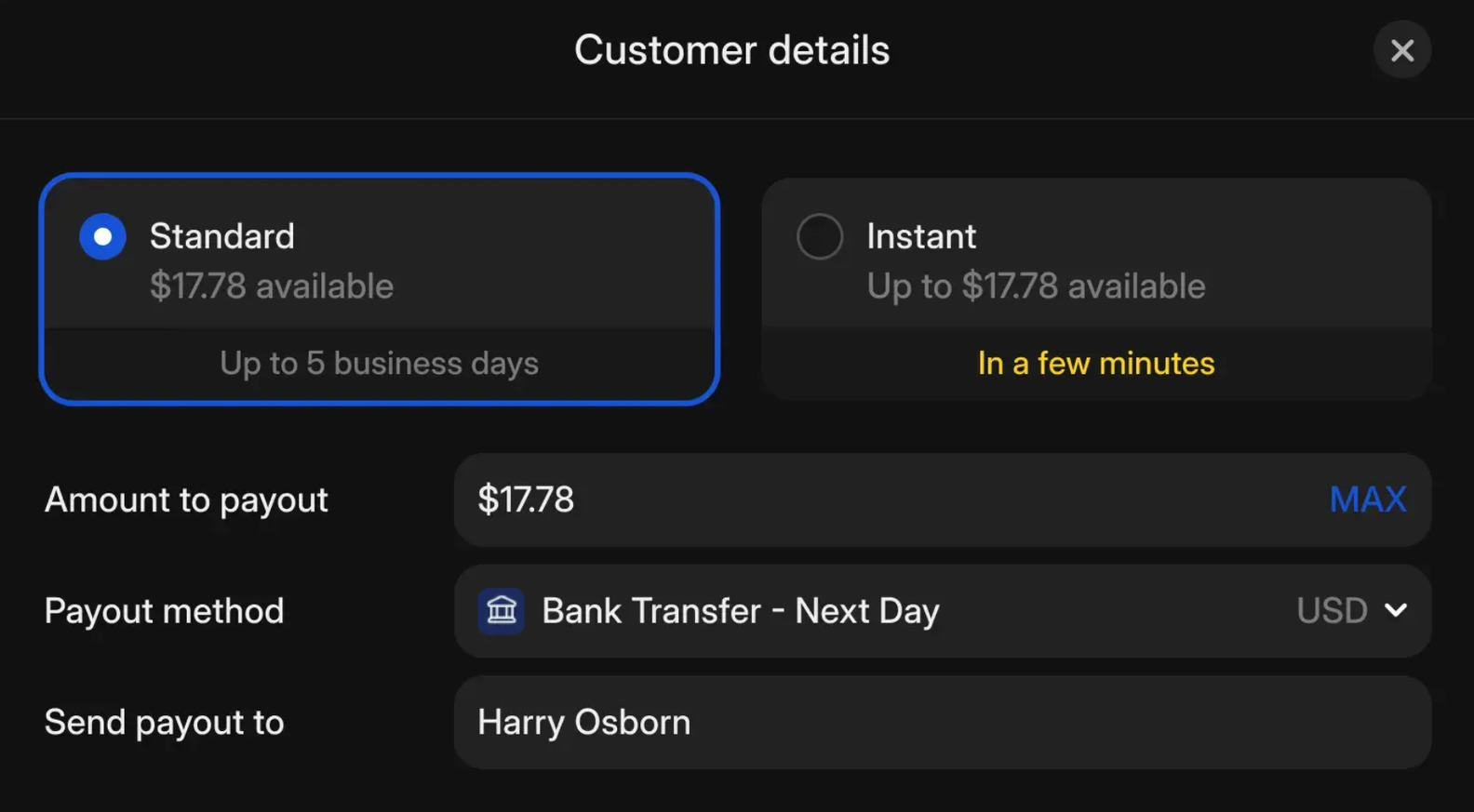
Compared with the nine-step build in the table above, that's most of the work handled for you.
What your team still owns
Using a payout provider doesn't mean giving up control. The infrastructure is handled for you, but you shape the seller experience, within your provider's rules.
You decide when a seller's money becomes available, how long you hold it, and whether there's a minimum cash-out. You set the fees, or choose to cover them. And, you decide how payouts look and feel inside your platform.
When building yourself still makes sense
If payments are your product, you send an enormous number of payouts, or you already hold the licenses, building your own instant payouts can be worth it. In those cases, owning more of the stack gives you control or savings that a provider can’t. Here’s why:
- Payments are your product. If you run a fintech or payroll company, moving money is what customers pay you for, so it makes sense to own how it works.
- Enormous payout volume. If you're sending millions of payouts a month, even small savings on each one add up, and it can be worth hiring a dedicated payments team to own more of the stack. But even then, most platforms at large scale still rely on banks and processors for the rails themselves.
- You already hold the licenses. Money transfer companies and digital wallets like PayPal and Cash App are already licensed money transmitters, so they've already done the most intense step.
If none of these describe you and your platform, the time and people that it takes to build payouts is almost always better spent on the product your sellers came for.
What to ask any provider
Before you choose a provider, ask five questions.
- Which rails and countries does it cover? You'll want both bank and debit card payouts, in every country your sellers are in.
- Who holds the licenses and who owns compliance?
- Who pays when a buyer disputes a payment after the seller has cashed out, and will the provider hold back a reserve from your sellers?
- What do standard and instant payouts cost, and can you choose whether you or your seller pays?
- How long does it take to launch? Some providers have you live in days, while others take months of integration and review.
The biggest names in platform payouts include Whop, Stripe Connect and Adyen for Platforms, which both support instant payouts to cards and bank accounts, Dwolla, which focuses on instant bank transfers through RTP and FedNow, and Trolley, which offers instant payouts to debit cards and digital wallets.
For a side-by-side comparison, read this guide to Stripe Connect alternatives.
Bringing instant payouts to your platform with Whop
Here’s what that looks like with Whop, the end-to-end platform for building a business.
When you accept payments with Whop, each payment is split at checkout, so your platform takes its cut and the rest goes to the seller’s balance. From there, sellers can choose a standard payout or an instant payout, which arrives in minutes.
Sellers can withdraw to a bank account, mobile wallet, or crypto wallet in 195+ countries and territories, and verify their identity, add payout methods, and withdraw their earnings through Whop’s payout portal, which you can embed in your app or link to as a Whop-hosted page.
Every seller account gets its own ledger, with available, pending, and reserve balances tracked separately, plus webhooks when funds become available and an API for reconciliation.
Instant payouts don’t have to wait for buyer payments to settle. Whop lets eligible businesses withdraw pending funds before card payments clear. Because of that, instant payouts are only available to businesses with an established track record:
Before instant withdrawals can be enabled, we need to ensure that the business is in good standing and has processed at least $10,000 in sales on our platform. This is because instant withdrawals allow merchants to receive their funds before the card payments have settled, exposing Whop to slightly greater risk compared to standard withdrawals.
- Sabrina, Fraud Analyst at Whop
If a withdrawal needs a closer look, the instant option doesn’t appear, and Whop’s Trust & Safety team reviews it instead (true as of October 2026).
Instant bank deposits cost 4% + $2.50 per payout, compared with $2.50 for next-day ACH. Instant payouts to Venmo cost 5% + $2.50, and crypto payouts cost 5% + $1.00.
And you can choose to cover payout fees for your sellers, or pass them on.
What Whop handled, and what I decided: setting up payouts on Squishy Swap
To test this for myself, I set up payouts on Squishy Swap, a marketplace I built using a Whop Blueprint. With physical goods and low-value sales, it’s a ‘wrong call’ platform for instant payouts, so this isn’t an instant payouts story. It shows what Whop handled, and the payout decisions that I made. Setup took around 20 minutes using Whop AI.
Whop handled Steps 1, 2, 4, and 7: compliance, the rails, the ledger, and the payout portal. Sellers verify their identity and add a payout method through the Payouts page in their seller dashboard, their identity and bank details are handled by Whop rather than Squishy Swap, and payouts stay locked until verification is complete.
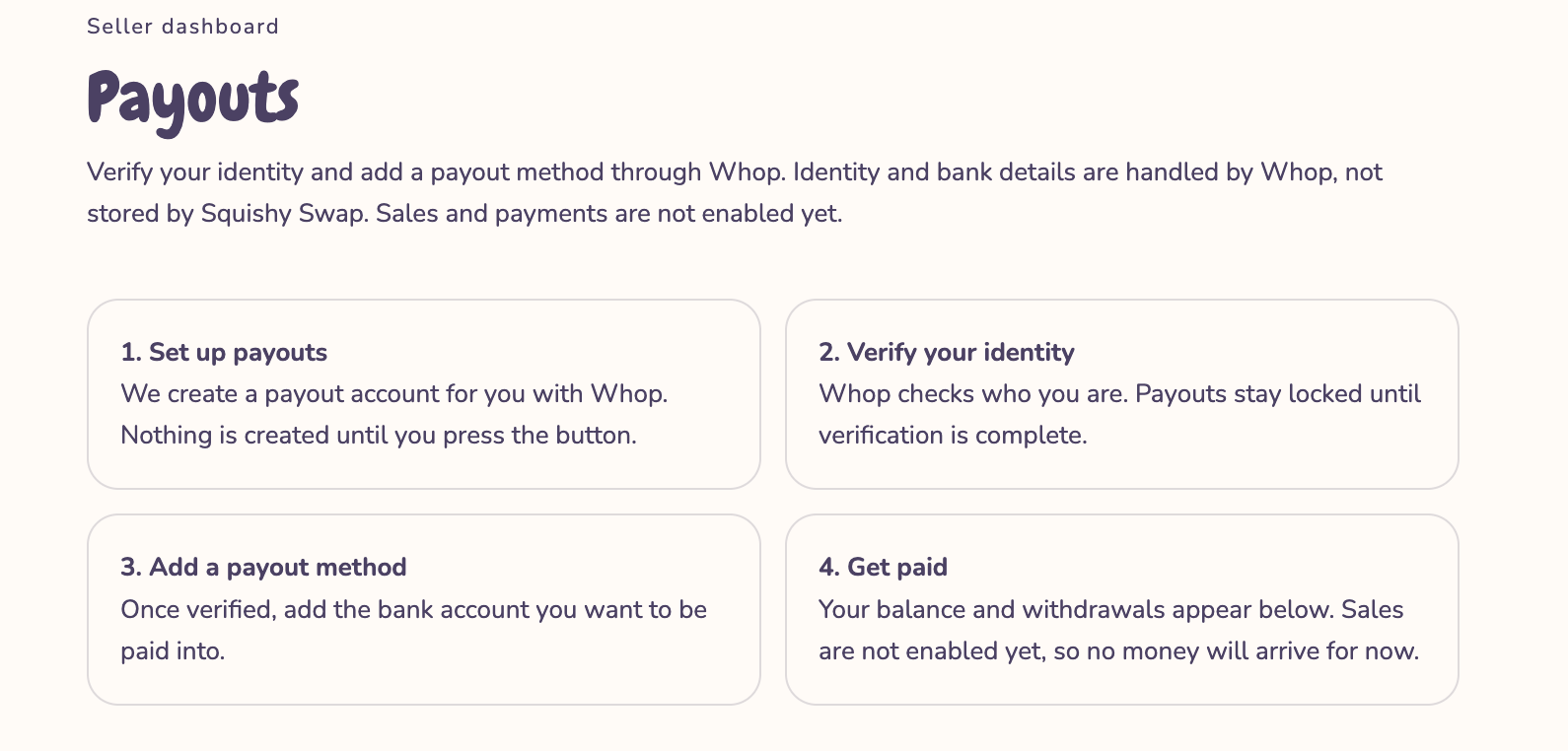
The rest was up to me. For Step 6, I set a seller fee of 10% plus a small fixed fee per order, with no buyer fee, and Squishy Swap absorbs the processing fees. For Step 3, I chose not to pay sellers straight away: earnings are released once the buyer confirms they have the item, or three days after the agreed pickup date. And for Step 5, verification is a hard gate before any seller can be paid.
For now, Squishy Swap uses delayed release with standard payouts, which suits small physical-goods sales. If that changes, instant payouts unlock once a business meets Whop’s eligibility threshold.
Offer instant payouts the easy way
Sellers, creators, and gig workers choose platforms by how fast they get paid, and instant payouts are quickly becoming the standard.
Building them yourself means nine steps of infrastructure, from licensing and rails to risk controls and 24/7 support, plus a team to keep it all running. For most platforms, that time and money is better spent elsewhere.
The simpler route? Use a payout provider. Keep control of what your sellers experience, let a provider handle the rest.
Offer instant payouts with Whop.
FAQs
How can I offer instant payouts to merchants?
There are two ways to offer instant payouts to merchants: build the payout infrastructure yourself, or use a licensed payments provider. Building it yourself means handling licensing, payment rails, fraud controls, and a real-time ledger. A provider like Whop handles that for you, while you still set your own fees and payout rules.
How long does it take to build instant payouts?
It depends on your route. Getting licensed as a money transmitter is the slowest part: compliance firm ComplyOne estimates a nationwide licensing rollout takes two to four years. Qualifying for an exemption, working with a sponsor bank, or using a licensed provider can skip that step, and with a provider, you integrate one API instead of connecting to each bank and processor yourself.
How much does it cost to build instant payouts?
Most of the cost is people. With a sponsor bank, a team of three engineers and one compliance hire costs around $58,000 a month, based on US median salaries, before rail fees or ongoing support. Getting licensed yourself adds legal fees, state fees, surety bonds, and audits on top.
Do you need a money transmitter license to offer instant payouts?
Possibly. In the US, holding and moving your sellers’ money can make you a money transmitter. Many marketplaces avoid this through the agent-of-the-payee exemption, which most states recognize, or by working with a sponsor bank or a licensed provider. Check with a payments lawyer before deciding.
Are instant payouts reversible?
Generally, no. Once an instant payout lands, it can't be pulled back, which is why fraud checks and holds need to happen before the money is sent.